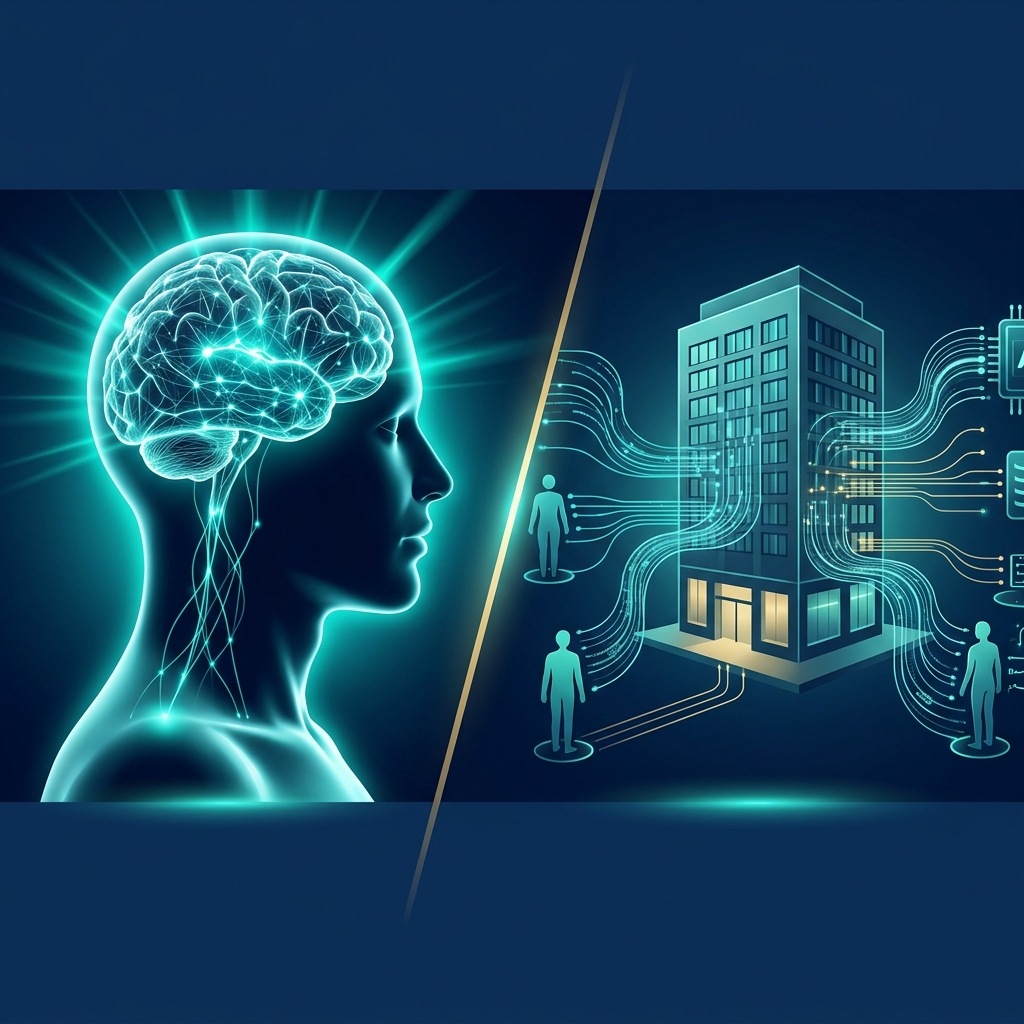
Why Agentic AI Without Governance Is a Ticking Time Bomb
In the context of agentic AI governance, in 2023, a US financial services firm's automated trading AI executed 1,500 transactions in under four minutes based on a misinterpreted news signal. The system operated exactly as designed. There was no human in the loop to question whether the input data was reliable. By the time the oversight team identified the anomaly, the firm had accumulated a significant unintended position.
[!IMPORTANT] Key Takeaways:
- Unmonitored agentic AI workflows can cascade failures across interconnected enterprise systems rapidly.
- Governance must shift from static validation to real-time telemetry and automated guardrails.
- The Safyi.ai platform provides continuous runtime monitoring to mitigate autonomous execution risks.
The technology worked. The governance didn't.
This is the defining risk of agentic AI at enterprise scale. These systems can execute complex, multi-step workflows faster than humans can monitor them. They make decisions that have real-world consequences. And in most organisations deploying them today, the governance infrastructure is running months or years behind the deployment infrastructure.
Gartner warns that by 2027, organisations without structured agentic AI governance will face materially higher rates of AI-related operational incidents than those with governance frameworks in place. The window to build that infrastructure proactively is closing.
Table of Contents
- Why Agentic AI Creates New Governance Challenges
- The Five Governance Failure Modes in Agentic Systems
- Regulatory Expectations for Autonomous AI
- The MHCAI Layered Governance Model for Agentic AI
- Building Hard Stops and Human Review Triggers
- Incident Response for Agentic AI Failures
- Why Mindacks and MHCAI Approach This Differently
- Frequently Asked Questions
- Ready to Govern Your Agentic AI?
1. Why Agentic AI Creates New Governance Challenges
Traditional AI governance was designed for a specific model: a human requests an output, the AI provides it, a human uses that output to make a decision. The AI was an input to human judgment.
Agentic AI breaks this model. The system doesn't provide an output and wait. It acts — often through multiple steps, over extended timeframes, across multiple external systems. By the time a human looks at what happened, the action has already been taken.
This creates several governance challenges that don't exist in conventional AI deployments:
Speed asymmetry. Agentic systems operate at machine speed. Human oversight processes operate at human speed. The gap between these two creates windows where consequential actions can occur before any meaningful review is possible.
Action reversibility. Many agentic actions are irreversible. An email sent, a transaction executed, a record updated. Unlike analytical outputs that a human can simply discard, agentic actions change the world.
Multi-system scope. Agentic systems often operate across multiple integrated platforms — CRM, ERP, communication tools, financial systems. A single agent may touch eight different systems in completing a workflow. Governance that doesn't account for cross-system scope is inadequate.
Emergent behaviour. When multiple agents interact — as in multi-agent architectures — the combined behaviour can be difficult to predict from the behaviour of individual agents. This is a relatively new challenge that existing governance frameworks were not designed for.
2. The Five Governance Failure Modes in Agentic Systems
Failure Mode 1: Undefined Scope The agent's permitted actions are not explicitly defined. Without a clear action boundary, agents can take actions that were not intended by the humans who configured them. This is the most common failure mode and the easiest to prevent.
Failure Mode 2: Missing Accountability When an agentic system acts, who is responsible? If the answer is unclear before deployment, the answer after an incident will be politically contentious and operationally damaging. Every agentic deployment needs a named accountable owner before it goes live.
Failure Mode 3: Inadequate Audit Logging Governance requires the ability to reconstruct what happened. Most agentic frameworks produce logs, but many organisations don't structure those logs to answer governance questions: Who authorised this action? What data informed this decision? What human review, if any, occurred?
Failure Mode 4: No Escalation Pathway When an agent encounters a scenario outside its competence — an unusual edge case, a conflict between objectives, an action that would exceed its mandate — it needs a defined escalation pathway to a human. Systems without this pathway will either fail silently or make a suboptimal decision without any human awareness.
Failure Mode 5: Insufficient Testing Before Deployment Agentic systems are significantly harder to test comprehensively than conventional AI because their action space is much larger. Many organisations deploy agentic systems after testing the happy path without adequately stress-testing edge cases, adversarial inputs, or failure scenarios.

3. Regulatory Expectations for Autonomous AI
The regulatory landscape for agentic AI is developing rapidly. Key requirements that enterprise leaders should understand:
EU AI Act The Act classifies autonomous systems with significant real-world impact as high-risk or higher. High-risk systems require human oversight mechanisms, technical documentation, and risk management systems. For agentic systems operating in financial services, HR, legal, or healthcare contexts, high-risk classification is likely.
NIST AI RMF The NIST framework's "Govern" function requires organisations to establish policies, processes, and accountability for all AI systems, including autonomous ones. The framework specifically notes the elevated risk profile of systems capable of taking real-world actions.
Financial Sector Regulation Banking regulators in the UK (PRA/FCA), EU (ECB/EBA), and US (OCC/Fed) have all signalled increasing expectations for governance of automated financial decision-making systems. Operational resilience requirements in the UK now explicitly cover AI-related operational risks.
Emerging Agentic-Specific Guidance Several jurisdictions are developing guidance specifically for autonomous AI. Organisations that build governance frameworks now, aligned with existing standards, will be better positioned as this guidance crystallises.
4. The MHCAI Layered Governance Model for Agentic AI
MHCAI's governance model for agentic systems operates across four layers:
Layer 1: Mandate Definition Define precisely what the agent is authorised to do. This is not a general capability description — it is a specific permission set. Authorised actions, prohibited actions, maximum scope per action type (e.g., transactions up to a defined value), and permitted data access.
Layer 2: Oversight Architecture Design the human review structure for the agent's activities. Define which action types require pre-approval, which trigger post-execution notification, and which can run fully autonomously. Build this architecture into the system configuration, not as a separate manual process.
Layer 3: Monitoring and Alerting Implement continuous monitoring of agent activity against expected behaviour baselines. Define alert conditions — action volumes outside normal parameters, specific action types, error rates — and ensure alerts reach humans who can assess and intervene.
Layer 4: Audit and Accountability Maintain structured audit logs for all agent actions. Define the retention period and access protocols for those logs. Assign the role responsible for reviewing audit logs on a defined schedule. This layer is what enables post-incident analysis and regulatory demonstration of oversight.
5. Building Hard Stops and Human Review Triggers
Hard stops are the governance mechanism that prevents agentic systems from causing irreversible harm. They are not optional features. They are foundational governance requirements.
A hard stop triggers when the system reaches a defined boundary and requires human approval before proceeding. Examples:
- Any financial transaction exceeding a defined monetary threshold
- Any communication to an external party on a defined sensitive topic list
- Any data deletion or irreversible data modification
- Any action involving a regulatory submission or formal legal document
- Any action affecting a significant number of users simultaneously
Human review triggers are lighter-weight. They don't stop execution but they flag the action for human awareness. Examples:
- Completion of a workflow that has produced outputs across a high-volume threshold
- An action sequence that includes one or more non-standard decisions
- Any interaction with a system or data source not included in the original mandate
Both mechanisms need to be defined, tested, and technically implemented before deployment. Governance that lives only in a document is not governance.
6. Incident Response for Agentic AI Failures
Every organisation deploying agentic AI should have an incident response plan in place before go-live. The plan should address:
Detection: How will the organisation know when an agentic system has taken an action outside its mandate or produced a harmful outcome? Detection mechanisms should be automated where possible.
Containment: What is the process for immediately pausing an agentic system when an incident is identified? This should be a one-step process with clear ownership.
Assessment: What is the process for evaluating the scope of impact? This requires the audit logging infrastructure described above.
Remediation: What is the process for reversing or mitigating the impact of an incident where possible?
Communication: What are the obligations to notify regulators, affected parties, and internal stakeholders? Under the EU AI Act, serious incidents involving high-risk AI systems may trigger notification requirements.
Review: What is the post-incident review process to prevent recurrence?
7. Why Mindacks and MHCAI Approach This Differently
Mindacks has built governance frameworks for agentic AI deployments across financial services, pharmaceutical, and professional services organisations. Our approach is distinguished by a focus on operational governance — not just documented governance.
We don't produce governance documents that pass an audit and then sit unused. We build governance systems that operate in production, with real monitoring, real accountability structures, and real incident response capability.
Our Safyi.ai platform provides continuous AI governance monitoring for agentic and non-agentic systems, aligned to ISO 42001 and NIST AI RMF requirements.
Frequently Asked Questions
What is agentic AI governance?
Agentic AI governance is the set of policies, controls, oversight mechanisms, and accountability structures specifically designed to manage the risks of autonomous AI systems that can take real-world actions.
Is agentic AI covered by existing AI governance frameworks?
ISO 42001 and NIST AI RMF both apply to agentic systems. However, agentic systems present specific risks — speed asymmetry, action reversibility, multi-system scope — that require additional governance controls beyond what general frameworks specify.
What is a hard stop in agentic AI?
A hard stop is a governance control that prevents an agentic system from taking a specific type of action without explicit human approval. Hard stops are typically defined for high-value, irreversible, or legally significant actions.
How do we audit agentic AI activity?
Through structured audit logging that records every action taken, the data that informed it, the authorisation status, and the outcome. Logs should be stored securely, retained for a defined period, and reviewed by accountable humans on a regular schedule.
Who should be accountable for agentic AI systems?
Every agentic deployment should have a named human owner who is accountable for the system's mandate, its performance, and its compliance. This person should have the authority and technical access to pause the system if needed.
Ready to Build Governance for Your Agentic AI?
Agentic AI without governance is not a bold strategy. It's an unmanaged liability. The organisations that build governance infrastructure now will deploy agentic systems more confidently, scale them more quickly, and avoid the operational incidents that will force governance on everyone eventually.
Book an Agentic AI Governance Design Workshop with Mindacks.
Take the Next Step with Mindacks
The gap between AI investment and AI impact is not inevitable. It's a solvable problem — but only if the human side of the equation gets the same attention as the technology.
Book a complimentary AI Readiness Assessment with Mindacks. We'll map where your organisation stands, benchmark your readiness against ISO 42001, identify your highest-priority gaps, and give you a clear, actionable path forward.
Authoritative References & Further Reading
Amit Kumar Soni
Leading the charge in responsible AI transformation. We help global enterprises align AI systems with human-centric governance, scaling intelligence securely and sustainably.
Read our story