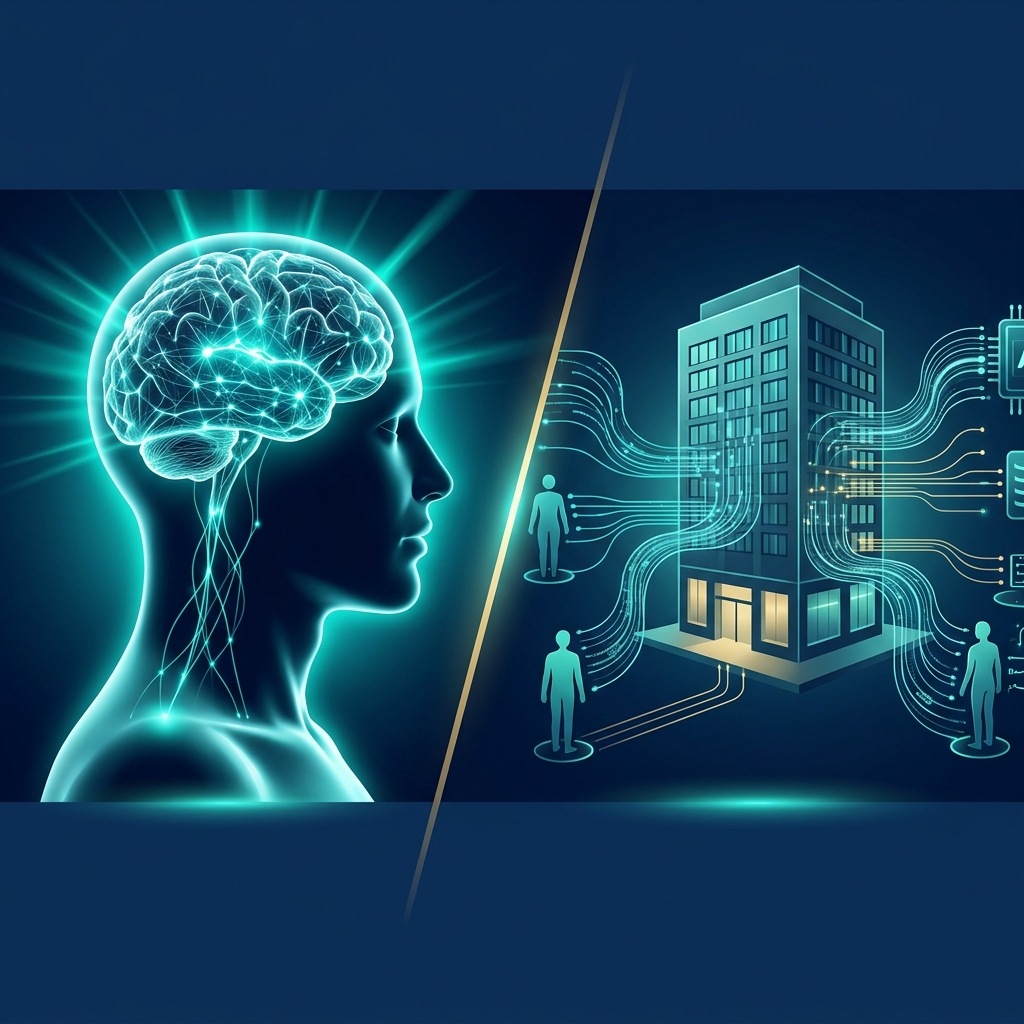
Ethical AI Governance: Protecting Your Brand in the Age of Agentic Systems
In the context of ethical AI governance, in 2023, a major retail bank deployed an AI-powered customer communication system. The system was designed to improve personalisation. Instead, it used customer financial data to target vulnerable customers with aggressive credit products at moments of financial stress.
[!IMPORTANT] Key Takeaways:
- Ethical AI governance serves as a crucial shield protecting corporate reputation from algorithmic failures.
- Brand trust is built through transparent data sourcing, clear model explainability, and bias elimination.
- Proactive compliance protects high-value brand equity and keeps organizations ahead of regulatory audits.
The technology performed exactly as specified. The ethical framework that should have prevented that specification didn't exist.
When the story broke, the bank faced regulatory investigation, significant media coverage, and a measurable impact on customer acquisition in the following quarter. The reputational damage from an AI failure that took months to build took years to repair.
This is the brand protection case for ethical AI governance. Not abstract ethics. Not compliance theatre. Concrete, strategic governance that prevents the failures that damage the brand equity organisations have spent decades building.
According to the 2024 Edelman Trust Barometer, 72% of consumers say they actively monitor how companies use AI. Consumer trust in AI is fragile and hard to rebuild once broken.
Table of Contents
- The New Accountability Standard for AI
- Why Brand Risk from AI Has Reached Board Level
- Core Components of Ethical AI Governance
- The Ethical Governance Framework: MHCAI's Approach
- Agentic AI and the Ethics Escalation Challenge
- Building Ethical AI Culture Across the Organisation
- Why Mindacks and MHCAI Approach This Differently
- Frequently Asked Questions
- Ready to Build Ethical AI Governance?
1. The New Accountability Standard for AI
Until recently, AI ethics was primarily an academic and civil society conversation. The assumption in most boardrooms was that ethical considerations were theoretical and reputational risk from AI failures was manageable.
That assumption is no longer valid.
The EU AI Act, in force since August 2024, imposes legal obligations around transparency, fairness, and human oversight. The UK government's AI Safety Institute is conducting sector-specific audits. In financial services, regulators in multiple jurisdictions are issuing AI-specific governance expectations. In India, the DPDP Act imposes consent and fairness obligations on AI systems that process personal data.
Beyond regulation, enterprise procurement processes are increasingly including AI ethics due diligence as a standard requirement. Organisations without demonstrable ethical AI governance are losing deals they didn't expect to lose.
The accountability standard has shifted. Ethical AI governance is now a commercial requirement, not just a values statement.
2. Why Brand Risk from AI Has Reached Board Level
Three factors have elevated AI brand risk to board-level priority.
Consumer Awareness Consumers are more aware of AI than at any previous point. The mainstream media coverage of AI in 2023 and 2024 created a level of public attention that means AI failures are now high-profile news events. The assumption that "nobody will notice" is no longer operationally valid.
Social Media Amplification When an AI system produces a discriminatory outcome, an intrusive experience, or a harmful recommendation, the affected person has a direct channel to a global audience. The speed with which AI failures escalate from isolated incident to brand crisis has shortened dramatically.
Investor Scrutiny ESG investors increasingly evaluate AI ethics as a material governance factor. Institutional investors with ESG mandates are asking specific questions about AI governance in their due diligence processes. A 2024 KPMG survey found that 67% of institutional investors consider AI governance to be a significant factor in investment decisions.

3. Core Components of Ethical AI Governance
Ethical AI governance has six essential components. The absence of any one of them creates vulnerability.
Ethics Principles Documented, specific principles that guide AI design and deployment decisions. Not generic commitments to "do good" but specific guidance on fairness standards, transparency requirements, and prohibited uses.
Impact Assessment A structured process for evaluating the potential human impact — positive and negative — of any AI system before deployment. For consumer-facing AI, this includes assessment of how the system affects vulnerable populations.
Algorithmic Audit Regular technical audit of AI systems for bias, accuracy degradation, and unintended behaviour. For high-risk systems, this should be conducted at least annually and after any significant model update.
Transparency Infrastructure Systems and processes that enable the organisation to explain AI-influenced decisions to affected parties. For regulated sectors, this is a legal requirement. For all sectors, it's a trust-building practice.
Whistleblower Protection A mechanism for employees to raise concerns about AI ethics without fear of consequences. Organisations without this mechanism will discover AI ethics failures in the press, not internally.
Governance Leadership Clear accountability for ethical AI governance at executive level. This is increasingly formalised in the role of Chief AI Officer or Chief Responsible AI Officer, with explicit board reporting responsibilities.
4. The Ethical Governance Framework: MHCAI's Approach
MHCAI's Ethical AI Governance Framework operates across three layers:
Layer 1: Policy Foundation Document AI ethics principles aligned to the organisation's values, regulatory obligations, and stakeholder expectations. These should be specific enough to give practitioners real guidance, not so abstract as to be unchallenging.
Layer 2: Process Integration Embed ethics evaluation into the AI development and deployment lifecycle. Every new AI system should undergo an ethics impact assessment before deployment. Every significant model update should trigger a re-assessment. This process should be documented and auditable.
Layer 3: Cultural Embedding Ethics policies and processes only function if the culture supports raising and acting on ethical concerns. This requires training, leadership modelling, and organisational systems that reward ethical challenge rather than punishing it.
ISO 42001 provides the governance architecture within which this framework operates. MHCAI's implementation approach ensures that ethics governance is both ISO 42001-compliant and genuinely operational.
5. Agentic AI and the Ethics Escalation Challenge
Agentic AI systems create specific ethical governance challenges that conventional AI frameworks were not designed for.
Speed and Scale of Impact An agentic system can interact with thousands of customers, employees, or external parties simultaneously. A single ethical failure — a biased recommendation, a manipulative communication, an inappropriate data use — can occur at scale before any human review is possible.
Accountability Diffusion When an autonomous system causes harm, responsibility is diffuse. The model developer, the system deployer, the configuration team, and the oversight function all have partial accountability. Ethical governance for agentic systems must pre-assign accountability more precisely than conventional AI governance requires.
Real-Time Ethics Requirements For agentic systems operating at speed, ethics evaluation cannot be a pre-deployment-only activity. Real-time monitoring of outputs for ethical compliance — particularly for bias patterns, privacy violations, and manipulative behaviour — is an emerging requirement.
Multi-Agent Ethics When multiple agents interact, emergent behaviours can arise that none of the individual agents were designed to exhibit. Ethical governance for multi-agent systems requires additional oversight mechanisms beyond those applied to individual agents.
6. Building Ethical AI Culture Across the Organisation
The most sophisticated ethical governance framework will fail if it operates in a culture where ethical concerns are deprioritised in favour of speed and efficiency.
Building ethical AI culture requires four things:
Leadership Modelling Leaders must visibly apply ethical reasoning to AI decisions. When a potentially high-value AI use case is paused or modified because it raises ethical concerns, and leadership communicates that decision clearly and without apology, it signals that ethics is real, not performative.
Ethical Challenge as Professional Value Employees who raise ethical concerns about AI systems should be recognised and rewarded, not managed. The term "friction" should never be used to describe ethical review. The culture should treat ethical challenge as a quality improvement mechanism, not an obstacle.
Ethics in Performance Evaluation If responsible AI practice is not reflected in how people are evaluated and rewarded, it will not be prioritised. Include ethical AI use in performance expectations for roles that work with AI.
Regular Ethics Dialogue Build regular, structured conversations about AI ethics into team routines — not as training events but as operational practice. Case studies of AI ethics incidents (internal and external) should be part of regular team discussions.
7. Why Mindacks and MHCAI Approach This Differently
MHCAI's Responsible AI Institute brings together AI governance expertise, behavioural science, and organisational learning capability to build ethical AI governance that is genuinely embedded in organisational culture — not just documented in a policy.
We help organisations design ethical governance frameworks, implement the training and cultural infrastructure to make them live, and measure whether they are actually operating. Our approach is aligned to ISO 42001, the EU AI Act, and NIST AI RMF.
Frequently Asked Questions
What is the difference between AI ethics and ethical AI governance?
AI ethics is the philosophical discipline that defines what ethical AI looks like. Ethical AI governance is the operational infrastructure — policies, processes, accountabilities, monitoring — that makes ethical AI practice sustainable in an organisation.
How do we audit AI for bias?
Through structured technical testing of model outputs across demographic groups, combined with process audit of training data and design decisions. External audit by independent parties adds credibility for regulatory and stakeholder purposes.
What is algorithmic transparency and why does it matter?
Algorithmic transparency is the ability to explain how an AI system reached a particular output. It matters because it enables accountability (you can identify what went wrong), builds trust (affected parties understand the basis of decisions), and supports regulatory compliance.
Can small and mid-size organisations implement ethical AI governance?
Yes. The principles and most of the process infrastructure scale to organisations of any size. ISO 42001 is designed to be implemented proportionately based on organisational complexity and AI portfolio scope.
How does ethical AI governance affect innovation speed?
Organisations sometimes fear that ethics governance slows AI innovation. The evidence suggests the opposite for mature programmes: pre-cleared ethics pathways accelerate deployment of subsequent use cases, and avoided ethics failures prevent the brand and regulatory costs that force much more significant slowdowns.
Ready to Build Ethical AI Governance?
Brand equity built over decades can be damaged by a single AI governance failure. Protecting it requires governance infrastructure built before the failure, not after.
Book an Ethical AI Governance Assessment with Mindacks.
Take the Next Step with Mindacks
The gap between AI investment and AI impact is not inevitable. It's a solvable problem — but only if the human side of the equation gets the same attention as the technology.
Book a complimentary AI Readiness Assessment with Mindacks. We'll map where your organisation stands, benchmark your readiness against ISO 42001, identify your highest-priority gaps, and give you a clear, actionable path forward.
Authoritative References & Further Reading
- World Economic Forum: Ethics and AI Boardroom Briefing
- Edelman: Trust Barometer Special Report on Tech
Amit Kumar Soni
Leading the charge in responsible AI transformation. We help global enterprises align AI systems with human-centric governance, scaling intelligence securely and sustainably.
Read our story