The Future of Work: Orchestrating Human + Agentic AI Teams
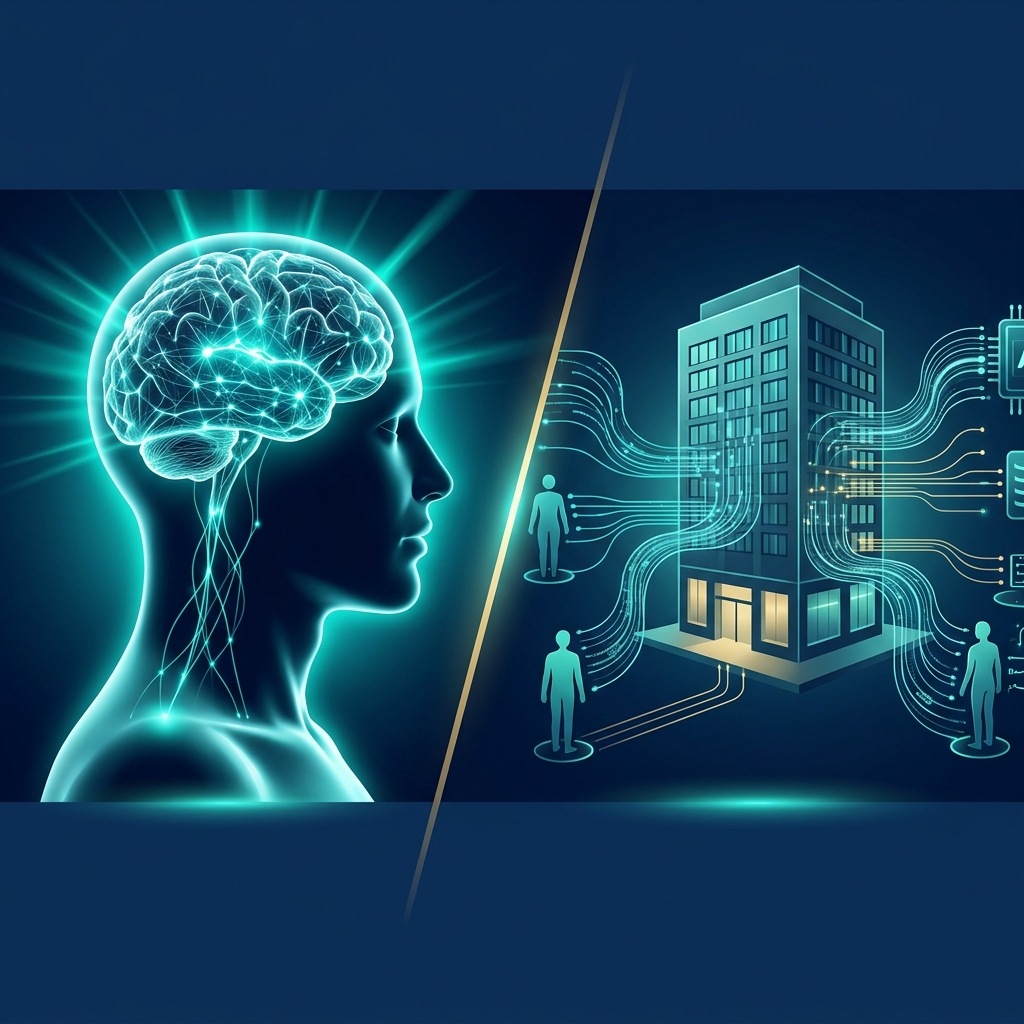
In the context of human agentic AI teams, the question organisations spent years debating — "Will AI replace human jobs?" — is the wrong question. The right question is: "How do we design teams where humans and AI work together better than either could work alone?"
[!IMPORTANT] Key Takeaways:
- The future workforce is defined by hybrid orchestration, pairing human creativity with agentic efficiency.
- Organizations must design team structures that define clear handoffs between humans and AI agents.
- Maintaining human agency and oversight is vital to prevent cognitive deskilling and operational vulnerabilities.
This is not a philosophical question. It's an operational design question that every enterprise leader needs to be answering now.
The World Economic Forum's Future of Jobs Report 2025 projects that the majority of the 170 million new roles created by technology transitions will require skills in human-AI collaboration — the ability to work effectively alongside AI systems, oversee their outputs, and integrate AI capability into complex workflows. These roles don't look like either the fully human roles they replace or the fully automated systems they work alongside. They're something new.
Gartner predicts that by 2028, 15% of all day-to-day work decisions in large enterprises will be made by AI agents. By 2030, McKinsey estimates, AI agents could handle the equivalent of 30% of current working hours across the US economy. The organisations building human-agent team architectures now are building the infrastructure for the dominant operational model of the next decade.
Table of Contents
- What a Human-Agent Team Actually Is
- The Collaboration Spectrum: Five Models
- Designing Human-Agent Roles
- The Orchestration Competency
- Managing Performance in Hybrid Teams
- Governance in Human-Agent Operations
- Why Mindacks and MHCAI Approach This Differently
- Frequently Asked Questions
- Ready to Design Your Human-Agent Teams?
1. What a Human-Agent Team Actually Is
A human-agent team is a working unit in which human professionals and autonomous AI agents collaborate on shared objectives, with defined roles, responsibilities, and interaction protocols for each party.
This is meaningfully different from a human team using AI tools. In a tool-use model, humans make decisions and use AI as a resource to inform those decisions. In a human-agent team model, agents actively execute parts of the workflow — taking actions, making decisions within defined parameters, and handing off to human team members at specified points.
The distinction matters for design, governance, and workforce preparation.
In a human-agent team model:
- Agents handle high-volume, time-sensitive, or complexity-threshold tasks autonomously
- Humans handle exceptions, ambiguous situations, high-stakes decisions, and relationship-sensitive interactions
- Handoff protocols define precisely where agent execution ends and human judgment begins
- Oversight mechanisms ensure humans maintain meaningful awareness of agent activity even when they're not actively involved
Real-world examples include: hedge fund portfolio monitoring where agents execute predefined rebalancing actions and flag unusual market conditions for human review; pharma regulatory submissions where agents compile standard documentation packages and human regulatory affairs professionals review, validate, and submit; and customer service operations where agents resolve routine enquiries and automatically escalate complex or emotionally sensitive situations to human agents.
2. The Collaboration Spectrum: Five Models
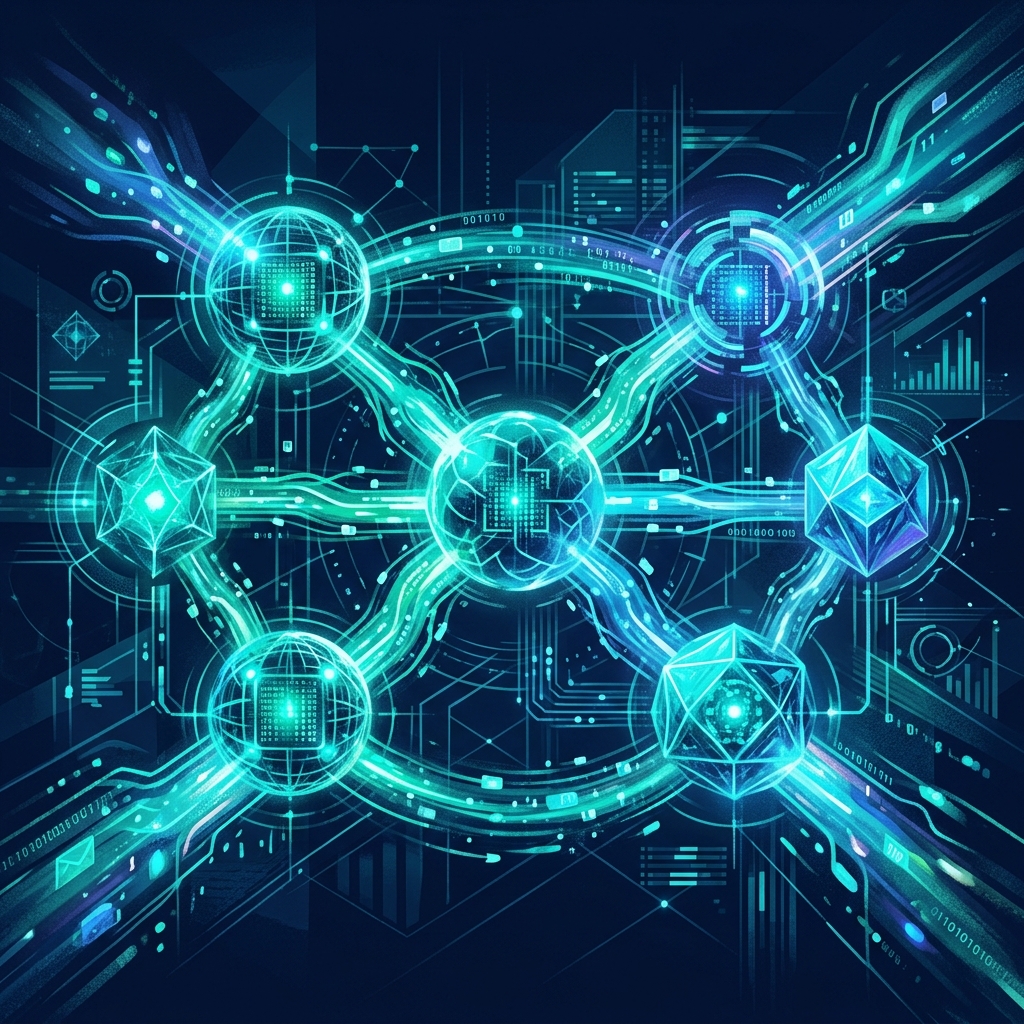
Human-agent collaboration exists across a spectrum. Different use cases require different models. Understanding this spectrum is the starting point for team design.
Model 1: Human-Directed The human defines the task, the agent executes it, the human reviews and acts on the output. The agent has no autonomous action authority. Best for: Research synthesis, first-draft generation, data analysis.
Model 2: Agent-Assisted The agent monitors a workflow and surfaces relevant information or recommendations. The human makes all decisions and takes all actions. Best for: Risk monitoring, compliance flagging, performance dashboards.
Model 3: Parallel Operations Human and agent work independently on the same objective, their outputs are compared, and a human makes the final determination. Best for: High-stakes analysis where independent verification is valuable, such as credit assessment or medical imaging review.
Model 4: Sequential Handoff The agent handles one stage of a workflow and hands off to the human for the next stage, or vice versa. Best for: Complex workflows with distinct phases that have different optimal performers — such as agent-handled data compilation followed by human-led interpretation and decision.
Model 5: Autonomous Agent with Human Oversight The agent executes a complete workflow autonomously. Humans receive summaries and alerts and intervene only when defined triggers are met. Best for: High-volume, time-sensitive operations with low per-decision stakes and strong monitoring infrastructure — such as routine procurement approvals or automated customer communication.
Each model requires different governance controls. Model 5 requires the most robust oversight infrastructure.
3. Designing Human-Agent Roles
Effective human-agent team design requires explicit role definition for both human and agent members of the team.
Agent Role Definition includes:
- Task scope: what the agent is authorised to do
- Authority limits: the boundaries on agent action (value thresholds, topic restrictions, tool access)
- Escalation triggers: conditions under which the agent must hand off to a human
- Output format: how the agent communicates its actions and outputs to human teammates
Human Role Definition in a human-agent team includes:
- Oversight responsibilities: what the human monitors and how
- Intervention authority: the human's authority to modify or override agent actions
- Escalation responsibilities: what the human escalates and to whom
- Collaboration skills: the specific capabilities required to work effectively with agent teammates
This last point deserves emphasis. Working effectively with an agentic AI teammate is a distinct skill set that most professionals have not yet developed. It includes understanding what the agent is optimising for, recognising patterns in agent output that warrant scrutiny, and managing the cognitive challenge of maintaining meaningful oversight of high-volume autonomous activity.
4. The Orchestration Competency
Orchestration is the emerging human competency most critical to the success of human-agent teams. It is the ability to define agent objectives, configure appropriate action parameters, monitor agent activity for anomalies, and intervene effectively when needed.
An orchestrator is not a passive supervisor. They are an active designer and manager of agent behaviour. The best orchestrators combine:
- Deep domain expertise (understanding what good looks like, which enables them to spot when the agent is producing something wrong)
- Systems thinking (understanding how the agent's actions connect to downstream outcomes)
- Governance knowledge (understanding the compliance and accountability implications of agent activity)
- Communication skills (translating between agent capability and business stakeholder expectations)
This is a highly valuable and currently rare competency set. Organisations that develop orchestration capability internally — through deliberate training programmes rather than hoping it emerges organically — will have a material advantage.
5. Managing Performance in Hybrid Teams
Performance management in human-agent teams requires frameworks that traditional HR systems were not designed for.
Measuring Hybrid Team Output Performance measurement should focus on team outcomes — the combined output of human and agent collaboration — not just individual human performance. This requires new metrics that capture: quality of human-agent collaboration, appropriateness of human oversight (not too much, not too little), effectiveness of agent configuration and orchestration.
Accountability in Agent-Assisted Decisions When an agent-assisted decision produces a poor outcome, accountability should sit with the human orchestrator, not with the technology. This principle needs to be explicit, clear, and consistently applied. Ambiguity about accountability undermines both governance and performance management.
Skills Assessment Regular assessment of the specific skills required for effective human-agent collaboration — orchestration, oversight, intervention — should be part of the performance management cycle. These are not static skills. They evolve as agent capabilities evolve.
Managing Agent Performance Agents need performance management too. This means monitoring output quality against defined standards, regular calibration of agent behaviour, and structured processes for identifying and addressing performance degradation.
6. Governance in Human-Agent Operations
Human-agent team operations require governance infrastructure across four domains:
Action Governance All significant agent actions should be logged, with clear records of what action was taken, on what basis, within whose authority, and with what outcome. Audit trails should be accessible and comprehensible to human reviewers.
Decision Governance For consequential decisions made in human-agent collaboration, governance should document the respective contributions of human and agent and assign clear human accountability for the final outcome.
Data Governance Agents accessing and processing data as part of workflow execution must do so within defined data governance boundaries. This includes access controls, retention policies, and consent management for personal data.
Incident Governance Structured protocols for managing incidents in human-agent operations: detection, escalation, containment, assessment, and remediation. Post-incident review processes should capture learning that improves both agent configuration and human orchestration.
7. Why Mindacks and MHCAI Approach This Differently
Mindacks approaches human-agent team design from the human infrastructure perspective. We don't start with the agent architecture. We start with the workforce design questions: what should humans be doing, what should agents be doing, and how do we build the governance and capability to make that collaboration work effectively.
MHCAI's programmes for human-agent collaboration include orchestration competency development, governance framework design for agentic operations, and change management for the workflow transformation that human-agent teams require.
Frequently Asked Questions
What makes a human-agent team different from a human using AI tools?
In a tool-use model, AI is a resource that humans use to inform their own decisions and actions. In a human-agent team, AI agents are active participants in the workflow — taking autonomous actions within defined parameters and collaborating with human teammates rather than simply responding to queries.
How do we decide which tasks should be assigned to agents vs humans?
Use a decision matrix that evaluates: volume, speed requirements, consistency requirements (agents excel here), and judgment requirements, relationship sensitivity, ethical complexity (humans excel here). Tasks with high volume and consistency requirements and low judgment complexity are good agent candidates.
What governance is required for agentic AI in team operations?
Action logging, decision accountability documentation, data governance boundaries for agent data access, and incident response protocols at minimum. ISO 42001 provides the governance architecture framework.
What is the impact of human-agent teams on employment?
WEF research projects that human-agent collaboration creates new role categories — orchestrators, AI quality managers, human-AI interface designers — that did not exist previously. The net employment effect depends heavily on how organisations manage the transition.
How do we prepare employees for human-agent collaboration?
Through explicit training in orchestration competency, clear role definition, and change management that addresses both the practical skill requirements and the psychological adjustment to working alongside autonomous systems.
Ready to Design Your Human-Agent Teams?
The organisations building human-agent collaboration capability now will be the operational leaders of the next decade. Don't leave this to emerge organically.
Book a Human-Agent Team Design Workshop with Mindacks.
Take the Next Step with Mindacks
The gap between AI investment and AI impact is not inevitable. It's a solvable problem — but only if the human side of the equation gets the same attention as the technology.
Book a complimentary AI Readiness Assessment with Mindacks. We'll map where your organisation stands, benchmark your readiness against ISO 42001, identify your highest-priority gaps, and give you a clear, actionable path forward.
Authoritative References & Further Reading
- Deloitte: Global Human Capital Trends & AI
- MIT Sloan: Orchestrating Human-AI Workforces
Amit Kumar Soni
Leading the charge in responsible AI transformation. We help global enterprises align AI systems with human-centric governance, scaling intelligence securely and sustainably.
Read our story