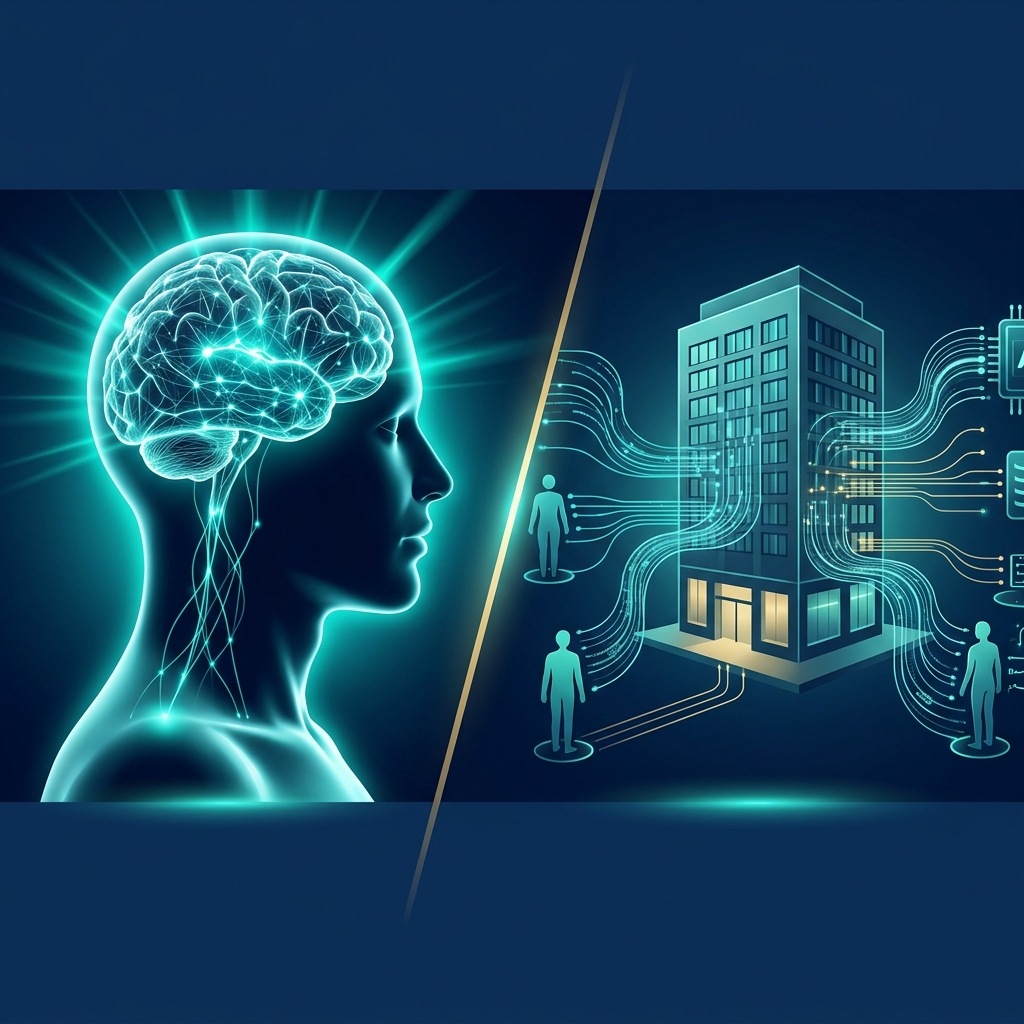
The Hidden Crisis in Human-Centred AI Adoption: Why 70% of Projects Fail in 2026
In the context of human-centred AI adoption, there is a growing gap between AI investment and AI impact. Organisations are spending more on artificial intelligence than ever before — yet the majority of initiatives fall short of what they promised. The failure is rarely technical. The failure is human.
[!IMPORTANT] Key Takeaways:
- Technology works, but adoption fails when workforce readiness and human trust are treated as secondary concerns.
- The failure of 70% of AI initiatives is rooted in three gaps: the Trust Gap, the Skills Gap, and the Governance Gap.
- Successful adoption requires a structured, human-centric framework like the MHCAI 5-Step Mind First Method (Assess, Prepare, Govern, Deploy, Evolve).
According to McKinsey's State of AI report, approximately 70% of digital transformation initiatives, including AI projects, fail to achieve their intended objectives. A 2023 IBM Global AI Adoption Index found that while 42% of enterprises have actively deployed AI, only a fraction of those deployments have scaled beyond pilot phases. The technology works. The human infrastructure around it doesn't.
This is the hidden crisis in human-centred AI adoption. And for enterprise leaders, understanding it is no longer optional.
Table of Contents
- Why Human-Centred AI Adoption Fails
- The Three Gaps Killing AI Projects
- What "Human-Centred" Actually Means in an Enterprise Context
- The MHCAI 5-Step Human-Centred Framework
- A Case Study in Getting It Right
- Why Mindacks and MHCAI Approach This Differently
- Frequently Asked Questions
- Ready to Assess Your AI Readiness?
1. Why Human-Centred AI Adoption Fails
Ask most organisations why their AI project underperformed and you'll hear about data quality, integration challenges, or budget constraints. These are real problems. But they're symptoms, not causes.
The root cause is consistently the same: the human side of AI deployment was treated as a secondary concern.
When IBM surveyed global executives in 2023, the top three barriers to AI scaling were not technical. They were lack of AI skills and expertise (34%), data complexity and governance issues (25%), and ethical concerns (21%). Each of these is a people problem.
Gartner has noted that through 2026, organisations that do not invest in AI governance and workforce readiness are significantly more likely to abandon AI projects after the proof-of-concept stage. The initial build is the easy part. Sustained adoption requires trust, skills, and accountability structures.
2. The Three Gaps Killing AI Projects
The Trust Gap
Employees don't trust what they don't understand. When workers encounter AI tools that produce outputs they can't explain or verify, they either blindly accept those outputs or quietly ignore the system. Both behaviours are dangerous. According to a 2024 Deloitte survey, only 37% of employees say they trust AI-generated recommendations enough to act on them without additional verification. In high-stakes functions like legal, finance, and HR, that number drops further.
Trust is not built through marketing. It's built through transparency. Employees need to understand what the AI is doing, what data it uses, and where its boundaries lie.
The Skills Gap
The World Economic Forum's Future of Jobs Report 2025 projects that 44% of all workers' core skills will be disrupted by 2030. AI literacy is the fastest-growing capability gap across industries. Yet most organisations continue to treat AI training as a one-time workshop rather than a continuous competency-building programme.
The skills gap is not just about knowing how to use a tool. It's about knowing when to question the tool. A finance professional who doesn't understand how an AI forecasting model works cannot identify when it has made a flawed assumption. The cost of that blind spot can be significant.
The Governance Gap
Most enterprises have governance frameworks for financial risk, cybersecurity, and data privacy. Very few have equivalent frameworks for AI. A 2023 KPMG survey found that only 35% of organisations have fully implemented an AI risk management process. The EU AI Act, which entered into force in August 2024 with full enforcement by 2026, has made this gap a regulatory liability, not just an operational one.
Without governance, accountability diffuses. When an AI system makes a harmful decision, nobody owns it.

3. What "Human-Centred" Actually Means in an Enterprise Context
Human-centred AI is not a design philosophy reserved for product teams. In an enterprise context, it is an operational discipline.
It means three things:
Augmentation, not replacement. AI systems should enhance human judgment, not substitute for it. A recruitment AI that screens CVs can save hours of manual work. But the final hiring decision, and accountability for that decision, must rest with a human.
Meaningful oversight. People working with AI must have enough understanding to catch errors, challenge outputs, and escalate concerns. Oversight that exists only on paper is not oversight.
Accountability by design. Before any AI system is deployed, organisations should be able to name the person accountable for its performance, the process for auditing it, and the mechanism for correcting it when it fails.
The NIST AI Risk Management Framework (AI RMF), published in 2023, identifies these same principles as foundational to trustworthy AI. So does ISO 42001, the international standard for AI management systems, published in December 2023.
4. The MHCAI 5-Step Human-Centred Framework
At Mindacks and the Mindacks Human-Centred AI Institute (MHCAI), we've developed a five-step framework specifically for enterprise AI adoption. We call it the Mind First Method.
Step 1: Assess Map every AI system in use across the organisation. Identify who uses it, who approved it, who owns it, and what decisions it influences. Most organisations discover significant shadow AI at this stage.
Step 2: Prepare Build baseline AI literacy across all levels. Not technical training — contextual literacy. What can this tool do? Where are its limits? What does responsible use look like in this function?
Step 3: Govern Design accountability structures before deployment, not after. This includes naming responsible owners, establishing audit mechanisms, and aligning AI use with ISO 42001 and applicable regulations.
Step 4: Deploy Roll out with human oversight built in. Low-risk, high-volume tasks can run with light-touch monitoring. High-stakes decisions require active human review at defined checkpoints.
Step 5: Evolve AI systems change. Data drifts. Regulations update. Organisations need continuous review cycles — not annual audits — to stay ahead of emerging risks.
5. A Case Study in Getting It Right
A global professional services firm operating across 12 markets deployed an AI-assisted contract review tool to reduce the time lawyers spent on first-pass document review. The initial results were strong — a 40% reduction in review time within the first quarter.
Six months later, the firm noticed an unusual pattern. Lawyers in several offices had begun approving contracts without making any modifications to the AI's suggestions, even on complex, high-value agreements where redlines would typically be expected.
The AI hadn't become unreliable. The humans had become over-reliant.
The firm paused deployment and introduced a structured review protocol: mandatory second-look requirements for contracts above a defined value, quarterly calibration sessions comparing AI outputs against lawyer outcomes, and a clear escalation path for any output the lawyer found questionable.
Within two months, confidence in the tool increased, audit trails improved, and liability exposure reduced. The technology hadn't changed. The governance around it had.
6. Why Mindacks and MHCAI Approach This Differently
Most AI consulting engagements focus on technology architecture. Mindacks starts with human architecture.
MHCAI's programmes are designed at the intersection of AI governance, behavioural science, and learning design. We don't sell governance templates. We build the internal capability for organisations to govern their own AI, now and as it evolves.
Our work spans ISO 42001 implementation, workforce readiness programmes, AI leadership development, and the Safyi.ai platform for continuous AI governance monitoring. Clients include organisations across financial services, pharma, technology, and professional services operating across Asia, the Middle East, and Europe.
The result is not just a governance document. It's a governance-ready organisation.
Frequently Asked Questions
What is human-centred AI?
Human-centred AI is an approach to designing, deploying, and governing AI systems that keeps human oversight, transparency, and accountability at the centre of every decision.
Why do most AI projects fail?
The primary reasons are not technical. They are lack of AI literacy in the workforce, absence of governance structures, and insufficient employee trust in AI outputs.
What is the MHCAI Framework?
The MHCAI Mind First Method is a five-step enterprise framework: Assess, Prepare, Govern, Deploy, Evolve. It is designed to build both governance infrastructure and human readiness simultaneously.
Is human-centred AI relevant only for large enterprises?
No. Any organisation deploying AI in consequential decisions — hiring, lending, healthcare, procurement — needs human-centred principles regardless of size.
How does ISO 42001 relate to human-centred AI?
ISO 42001 is the international management system standard for AI. It operationalises human-centred principles into auditable governance requirements.
Ready to Build a Human-Centred AI Organisation?
The gap between AI investment and AI impact is not inevitable. It's a solvable problem — but only if the human side of the equation gets the same attention as the technology.
Book a complimentary AI Readiness Assessment with Mindacks. We'll map where your organisation stands, identify your highest-priority gaps, and give you a clear path forward.
Book Your AI Readiness Assessment →
Take the Next Step with Mindacks
The gap between AI investment and AI impact is not inevitable. It's a solvable problem — but only if the human side of the equation gets the same attention as the technology.
Book a complimentary AI Readiness Assessment with Mindacks. We'll map where your organisation stands, benchmark your readiness against ISO 42001, identify your highest-priority gaps, and give you a clear, actionable path forward.
Authoritative References & Further Reading
- McKinsey & Company: The State of AI in 2023
- IBM: Global AI Adoption Index Report
- World Economic Forum: Future of Jobs Report
Amit Kumar Soni
Leading the charge in responsible AI transformation. We help global enterprises align AI systems with human-centric governance, scaling intelligence securely and sustainably.
Read our story