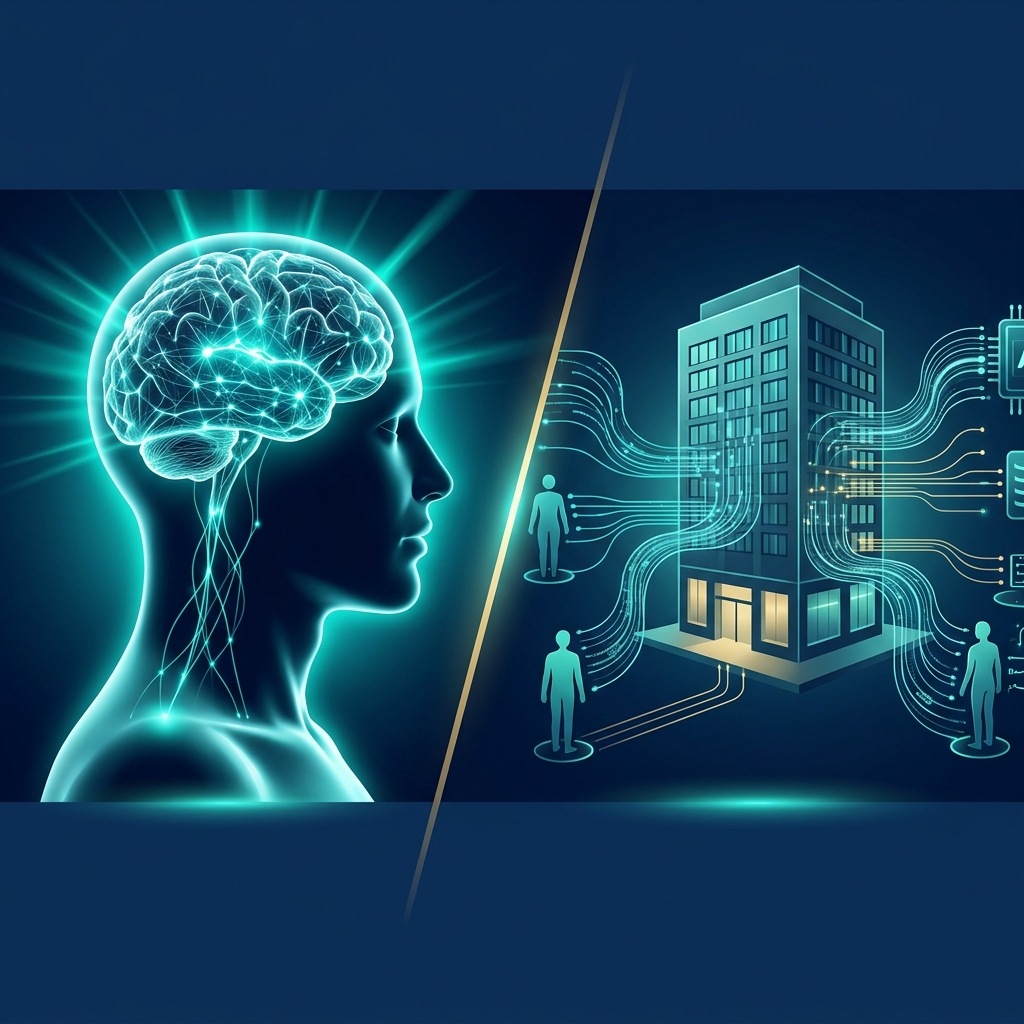
From Hype to Reality: Mastering Responsible AI Transformation in 2026
In the context of responsible AI transformation, every large organisation has run AI pilots. Most have run several. A significant number have been running pilots for three or four years. And when executives are asked about the progress of their AI transformation, the most common answer — delivered with varying degrees of candour — is that results have been promising but scaling has been harder than expected.
[!IMPORTANT] Key Takeaways:
- Scaling AI responsibly requires transitioning from isolated pilots to institutional governance.
- Establishing clear maturity benchmarks helps organizations allocate resources and manage systemic risks.
- The transformation journey depends on C-suite buy-in, unified governance, and continuous learning design.
This is not a technology problem. The models are capable. The use cases are real. The business cases stack up. The difficulty lies in moving from a successful proof of concept to an enterprise-wide capability that operates reliably, responsibly, and at scale.
According to McKinsey's 2023 global survey on AI, only 4% of organisations describe themselves as leaders in AI adoption — organisations that have successfully scaled AI across multiple functions with measurable business impact. The other 96% are somewhere between early exploration and frustrated stagnation.
The difference between the 4% and the rest is not investment level or technological sophistication. It's governance maturity and organisational readiness. This article explains what responsible AI transformation looks like in practice, and how to build it.
Table of Contents
- Why Most AI Transformations Stall After Pilot
- The AI Transformation Maturity Model
- The Responsible AI Transformation Roadmap
- Common Failure Patterns and How to Avoid Them
- The Role of Governance in Transformation Success
- Building the Transformation Team
- Why Mindacks and MHCAI Approach This Differently
- Frequently Asked Questions
- Ready to Move from Pilot to Scale?
1. Why Most AI Transformations Stall After Pilot
Understanding why pilots succeed and transformation fails is the starting point.
Pilots succeed for structural reasons that don't generalise. A pilot involves a small, self-selected team that is motivated to make it work. The scope is narrow and manageable. Leadership attention is focused. The definition of success is flexible enough to accommodate early imperfections.
Scaling a pilot across an enterprise reverses all of these conditions. The team is no longer self-selected — it includes people who didn't ask for this. The scope is wide and intersects with every existing process, system, and accountability structure. Leadership attention has moved to the next exciting initiative. And the definition of success becomes much stricter as the change affects real operations.
Boston Consulting Group's research on AI transformation (2024) found that organisations typically lose 40–60% of the value achieved in pilots when they attempt to scale. The three most common causes are poor change management, insufficient governance infrastructure, and AI systems that were not designed with scaling in mind from the outset.
2. The AI Transformation Maturity Model
MHCAI assesses AI transformation maturity across five dimensions. Understanding where your organisation sits on each dimension is the first step in building a realistic transformation plan.
Dimension 1: Strategy Alignment Is AI strategy connected to business strategy at the highest level? Or is it a technology initiative running in parallel with limited executive ownership?
Immature: AI projects driven by IT or innovation teams, disconnected from business unit goals. Mature: AI embedded in business unit planning cycles, with executive sponsors at C-suite level.
Dimension 2: Governance Infrastructure Does the organisation have documented AI policies, risk classification, accountability structures, and audit mechanisms?
Immature: Individual projects govern themselves ad hoc. No organisation-wide policies. Mature: ISO 42001-aligned governance framework. Named owners for each AI system. Active monitoring and audit.
Dimension 3: Workforce Readiness What proportion of the workforce has the AI literacy and role-specific capability needed for their current and planned AI environments?
Immature: Small group of AI champions, large majority of workforce with no AI training or capability. Mature: Organisation-wide AI literacy programme. Role-specific capability embedded in functional training. Regular refreshes.
Dimension 4: Data Infrastructure Is data of sufficient quality, accessibility, and governance to support AI at scale?
Immature: Siloed data, inconsistent quality standards, no AI-specific data governance policies. Mature: Unified data governance framework. AI-specific data quality standards. Clean, accessible data assets.
Dimension 5: Operating Model Are business processes designed to work with AI, or were they designed before AI and modified as AI was bolted on?
Immature: AI tools added to existing processes without process redesign. High friction. Low adoption. Mature: End-to-end process design that incorporates AI natively. Human oversight built into workflows. Measurable outcomes.

3. The Responsible AI Transformation Roadmap
Phase 1: Foundation (Months 1–3)
Establish the governance baseline. Complete an AI inventory. Build the executive ownership structure. Document initial AI policies. Conduct a workforce readiness assessment.
This phase should be completed before any new AI deployments begin. Most organisations resist this sequencing because it feels like slowing down. It is not. It is preventing the governance debt that will slow everything down at Phase 3.
Phase 2: Governance Framework (Months 3–6)
Build the full governance framework. Risk classification. Accountability assignments. Monitoring and audit infrastructure. Align to ISO 42001. Develop AI use policies for each major function. Begin foundational AI literacy training.
Phase 3: Prioritised Deployment (Months 4–9)
Select three to five high-value, governance-cleared AI use cases for deployment. Use these deployments to stress-test the governance framework in production. Collect data on what works and what doesn't. Build the internal change management and communication capability.
Phase 4: Scale (Months 9–18)
Expand deployment across additional use cases and functions. Use the governance infrastructure built in Phase 2 as the accelerator, not the brake. Organisations with strong governance frameworks deploy new AI faster than those without, because every new use case has a cleared pathway rather than a blank governance slate.
Phase 5: Optimise (Month 18+)
Refine governance based on production experience. Pursue ISO 42001 certification. Build continuous learning infrastructure. Establish AI as a core organisational capability, not a project.
4. Common Failure Patterns and How to Avoid Them
Failure Pattern 1: Technology-First Design Organisations buy or build AI tools and then design business processes and governance around them. This inverts the right sequence. Business requirements and governance considerations should shape technology selection, not the other way around.
Failure Pattern 2: Governance as Friction When governance is designed by people who see it as a compliance burden, it becomes a friction layer that everyone tries to route around. Governance designed as an enabler — providing cleared pathways for responsible deployment — becomes a competitive advantage.
Failure Pattern 3: Measuring Activity Instead of Impact AI transformation programmes that measure completion rates, number of pilots, and tools deployed instead of business outcomes and human impact lose sight of what they're trying to achieve. Outcome-based measurement from the first pilot onwards is essential.
Failure Pattern 4: Ignoring the Middle Layer Most AI communication is directed at the C-suite and the operational workforce. Middle managers — the people who directly control how their teams adopt new tools — are frequently neglected. Middle managers who don't understand AI or don't trust it will suppress adoption more effectively than any other factor.
Failure Pattern 5: Point-in-Time Training AI is evolving at a pace that makes any single training event obsolete within six months. Organisations that treat AI training as a one-time initiative rather than a continuous capability-building programme will find their workforce falling behind the technology faster than they can catch up.
5. The Role of Governance in Transformation Success
This point is worth restating directly, because it runs counter to how most organisations think about governance.
Governance is not a brake on AI transformation. It is the infrastructure that makes sustainable transformation possible.
Without governance, every new AI deployment starts from scratch. Every team builds its own rules. Every incident triggers reactive firefighting. The organisation develops a patchwork of incompatible standards and inconsistent practices.
With governance, every new deployment has a cleared pathway. Risk classification is pre-built. Accountability structures are pre-designed. Training requirements are pre-defined. The cost of each incremental deployment falls as the governance infrastructure pays dividends across multiple use cases.
Organisations that invest in governance infrastructure in the first 12 months of transformation move significantly faster in months 13–36 than those that skipped it.
6. Building the Transformation Team
Successful AI transformation requires a cross-functional leadership structure. The core team should include:
Chief AI Officer or AI Programme Lead: Accountable for the overall transformation strategy and governance framework.
Business Unit AI Leads: Representatives from each major function responsible for AI adoption and governance within their domain.
Legal and Compliance: Essential from day one for regulatory navigation and contractual governance of AI vendors.
HR and L&D: Critical for workforce readiness design and change management.
Technology and Data: For technical governance, data infrastructure, and integration management.
Internal Communications: Often forgotten. Effective AI transformation communications require dedicated expertise.
This is not a technology project with some change management added. It's an organisational transformation in which technology is one component among several.
7. Why Mindacks and MHCAI Approach This Differently
Mindacks has guided AI transformation programmes for organisations across multiple industries and geographies. Our distinctive contribution is the integration of governance expertise, workforce readiness design, and behavioural change capability — the three dimensions most commonly missing from technology-led transformation programmes.
We operate at the intersection of AI strategy, ISO 42001 implementation, and organisational learning. We build transformation programmes that are rigorous enough to satisfy regulatory requirements and practical enough to actually change how people work.
Frequently Asked Questions
How long does an enterprise AI transformation take?
Building a solid governance foundation and achieving measurable scaled deployment across multiple functions typically takes 18 to 36 months. Quick wins are achievable much earlier, but sustainable transformation takes time.
What is the biggest mistake organisations make in AI transformation?
Skipping governance investment in the early phases in order to move faster. Organisations that skip governance build technical debt and operational risk that slows everything down at exactly the point when they're trying to scale.
How do we prioritise AI use cases for deployment?
Use a two-axis framework: business value (impact on revenue, cost, or risk) and implementation readiness (data quality, governance readiness, workforce capability). High value, high readiness use cases should go first.
What does AI transformation success look like?
AI embedded in core business processes. Governance frameworks operating continuously. Workforce confidence in AI use. Measurable business outcomes attributable to AI. And the organisational capability to continue deploying AI responsibly as the technology evolves.
How does responsible AI affect transformation speed?
Short term, governance adds process. Medium term, governance infrastructure accelerates deployment significantly by providing cleared pathways and reducing the per-project governance overhead.
Ready to Move from Pilot to Scale?
The AI transformation journey is not about the first pilot. It's about building the organisational capability to deploy AI responsibly, repeatedly, and at scale.
Start with a Transformation Readiness Assessment from Mindacks.
Take the Next Step with Mindacks
The gap between AI investment and AI impact is not inevitable. It's a solvable problem — but only if the human side of the equation gets the same attention as the technology.
Book a complimentary AI Readiness Assessment with Mindacks. We'll map where your organisation stands, benchmark your readiness against ISO 42001, identify your highest-priority gaps, and give you a clear, actionable path forward.
Authoritative References & Further Reading
Amit Kumar Soni
Leading the charge in responsible AI transformation. We help global enterprises align AI systems with human-centric governance, scaling intelligence securely and sustainably.
Read our story